
At Support Staffordshire, two of our key values are being people powered and inclusive, ensuring everyone’s individual skills, talents and needs are supported so they can thrive. One accreditation we are extremely proud of is our Bronze Award for Thrive at Work. For us “Thrive at Work” is not just a policy—it’s a living, evolving culture that puts people first and an embodiment of compassion, courage, and community, shaped by all who work for us. Learn all about why and how we have achieved it and how it could benefit your organisation too.
What is Thrive at Work?
Thrive at Work is the West Midlands Combined Authorities good work and better health accreditation programme – supporting organisations to create healthier, safer and thriving workplaces, focusing on a holistic understanding of health and wellbeing in the workplace.
Aligning with the principles of Good Work, the Thrive at Work framework promotes a structured, evidence-informed approach, guiding businesses to develop policies and practices that support quality employment and healthier working lives.
Thrive at Work recognises and celebrates organisational achievements through multi-level awards which grow in breadth and depth as employers continue to demonstrate how they are putting the Thrive at Work framework into practice; from introducing and establishing fundamentals, to going above and beyond by implementing best practice and creating a thriving place to live, work and belong. Through this initiative, Support Staffordshire demonstrates a clear commitment to prioritising the health, happiness, and engagement of its workforce.
The Roots: Listening, Learning, and Lived Experience
The Thrive at Work journey began with a simple but profound belief: that work should be a place where people feel safe, valued, and able to bring their whole selves. As Sandra Payne, Deputy CEO of Support Staffordshire, recalls, “With Thrive at Work, you start by working through an organisational self-assessment, the results of which then forms your action plan. But without staff input, it wouldn’t mean anything, so we involved all the staff at team meetings and it just took off from there.”
This commitment to listening—to really hearing what staff need—runs through everything. The health needs assessment wasn’t a tick-box exercise; it was a genuine invitation for staff to shape the future of their workplace.
Building Policies with Heart
One of the most striking aspects of Support Staffordshire’s approach is the care and authenticity poured into the workplace policies. Becky, Support Staffordshire’s HR & Wellbeing Officer, describes the process: “When I first started working for Support Staffordshire we didn’t have a standalone wellbeing, flexible working, or family-friendly policy. The Thrive at Work accreditation requires the organisation to have these and several other policies in place. I set about writing them from scratch drawing from our ethos and values. It was important that we captured our culture within the policies, whilst ensuring fairness, consistency, and inclusivity.”
Naomi Berry, our Thrive at Work Accreditation Coordinator, from West Midlands Combined Authority, who reviewed our policies said, “These are great, always lovely reading such thoughtfully written policies.” Becky welcomed the feedback. “This was lovely to hear as it reinforces that staff wellbeing is always at the heart of our policies and procedures.” In the report that we received from the Quality Standards Team at Thrive at work, it states, “You should take real pride in the work you have done and this significant achievement.”
Turning Staff Voices into Lasting Change
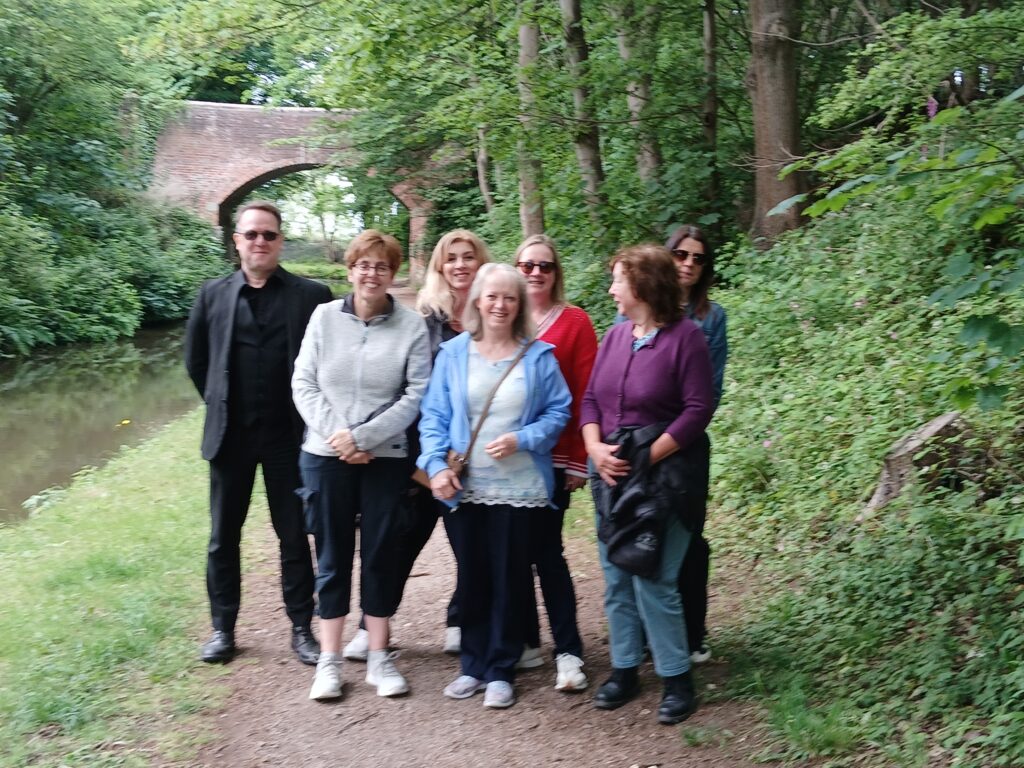
The Thrive at Work working group is a dedicated team within the organisation, formed to champion staff health and wellbeing through a structured, inclusive approach. We conducted a staff health needs assessment survey, which became the foundation for an evolving action plan, which the group bases its work on. This plan is not just a checklist—it’s a living document shaped by staff input and regularly reviewed in quarterly meetings. From the outset, the group encouraged broad participation: After an All-Staff Day presentation, 16 staff members—including three trustees—volunteered as wellbeing champions, ensuring diverse representation and shared ownership.
The group’s work is organised around the key criteria and guidelines already mentioned. The Thrive at Work dashboard tracks progress through foundation, bronze, silver, and gold levels, with each stage requiring evidence of real, embedded change. The group’s champions help drive initiatives, support colleagues, and keep the action plan active and relevant. Their efforts have led to the creation of new policies, regular wellbeing initiatives, and a culture where staff feel heard, valued, and empowered to contribute.
Champions, Listening Ears, and Real Support
Support Staffordshire’s wellbeing champions and “listening ear” volunteers are the beating heart of the Thrive at Work programme. Ian, one of Support Staffordshire’s Community Development Officers, stands out as a testament to compassion, understanding, and genuine support. With a background in community work at St. Giles Hospice, Ian brought a passion for bereavement support to his current role, shaping not just policies but the very culture of his organisation.
“My passion for bereavement is due to my background. I worked in community for nine years for St. Giles Hospice, taking death, dying and bereavement out to the community. I wanted the subject to be part of everyday conversation and not the taboo, it can be,” Ian shares. His commitment to helping others navigate loss extends beyond the workplace, as he has delivered understanding bereavement and loss workshops tailored for both community and professional audiences. “Some of the behaviours that you get following a bereavement, you may also get with other losses. Loss of a job, loss of your relationship, that sort of thing.”
Ian’s empathy doesn’t stop there. Inspired by his personal life experience, he also became a menopause champion, offering support from a partner’s perspective. “As a husband, my wife’s menopause changed our relationship and I had to learn to understand,” he explains. “If you understand a subject, whether it’s bereavement, menopause or whatever it is, then you’re better equipped to be able to offer support. We can never truly know what somebody’s going through, but I believe that good support starts with understanding and empathy follows.”
His willingness to be a “listening ear” for colleagues is another cornerstone of his contribution. “Everybody who’s a listening ear is a volunteer. We had some excellent training. The idea is that you’re there for staff to provide a listening ear that can be about anything.” Ian’s approach is rooted in confidentiality and non-judgement: “It’s totally confidential, the only person who knows that I will have spoken to someone needing a listening ear is HR. And that’s purely from a logging perspective. It doesn’t go on their work record. They only know the name of the person and the date that they spoke with me.”
For Ian, the rewards are mutual. “I think for me, still being able to offer bereavement support is quite nice because it keeps my hand in. I’ve enjoyed being a part of it and it plays to my past skills and experience.” His story is a powerful reminder that support in the workplace is not just about policies, but about people who care enough to listen, understand, and make a difference—one conversation at a time.
Wellbeing in Action: Initiatives and Everyday Kindness
The Thrive at Work journey is filled with practical steps and meaningful moments. From “lunch and learn” sessions on musculoskeletal health and endometriosis, to the introduction of confidential counselling funded by a wellbeing grant, every initiative is designed to meet real needs. Staff are encouraged to share their stories, and the impact is profound.
Becky reflects, “Following Lunch & Learn sessions I respect and understand the people I work with even more. How amazing and brave our staff are to share their lived experiences. The lunch and learns enhance trust, start conversations, and open doors for other people to share their stories and experiences. Our culture is one where people feel heard, supported, and able to be themselves. Nothing is forced on people; everything is optional and available if you want to take part. The uptake has been amazing, and people are disappointed if they can’t attend.”
Flexibility, Fairness, and Inclusion
Support Staffordshire’s approach is deeply person-centred. Policies provide structure, but flexibility ensures everyone’s unique circumstances are respected. Whether it’s allowing staff to text in sick when a phone call feels too much, or adapting hours for those with health conditions, the message is clear: “We’re just incredibly flexible and inclusive to everyone’s needs,” states Becky.
Sandra shares, “We thought the policies would make things too rigid, but they haven’t. The policies provide a structure, but we still take things case by case and listen to what people need.” This inclusivity extends to recruitment and retention, with candidates drawn to the organisation’s reputation for care and staff turnover is very low as people value the organisations ethos on wellbeing and want to stay.
Confidential Counselling and Real Impact
The introduction of confidential counselling has been a lifeline for many. “So many members of staff use it. The fact that it’s confidential is great, but people also come back and tell me how much it helped them. It’s very empowering,” Becky explains.
Sandra adds, “I’m so proud of being able to offer our staff this counselling. One staff member has fed back that it has turned their life around, after the counselling they have become more resilient and have a new perspective on dealing with situations.”
A Platform for Growth, Not Just Accreditation
The Thrive at Work dashboard—foundation, bronze, silver, gold—provides structure and challenge, but the real value is in the journey. “It’s not a tick-box exercise for us,” Becky insists. “We adapt, we change, we embed things that really matter. Even if we never reach gold, the process itself makes us better.”
Sandra agrees, “The quality standard helps you establish what you’re currently doing and how you can make improvements. Having regular meetings with an Accreditation Coordinator speeds up the process and helps you formalise things, but in a flexible person centred way.”
Recruitment, Retention, and a Sense of Belonging
The culture of care has transformed recruitment and retention. “We’re getting some amazing people coming forward for interviews. They read about us, they see what we do, and they want to be part of it. Our retention is amazing showing how valued people feel at Support Staffordshire,” Sandra shares.
Becky adds, “People are disappointed if they’re not successful. They say, ‘I can really picture myself in your organisation.’ And when we do interviews, we’re looking for that fit. Sometimes we offer people different roles because we know they’ll be a great addition.”
The Everyday Difference
Perhaps the most powerful testament to Thrive at Work is the everyday difference it makes. Staff feel able to ask for what they need, to take care of themselves and their families, and to bring their best selves to work.
Here are some stories from staff who have felt the impact of Thrive at Work:
“I have benefitted from having a truly flexible employer as somebody with multiple disabilities. Some weeks I can have up to 4 different medical appointments, but I am able to flex my workload around these and am never made to feel like I am causing a problem.” (Anonymous)
“Support Staffordshire’s work around the Thrive at Work initiative has never felt like a tick-box exercise. It’s genuinely been about creating a space where staff can thrive — no matter what’s going on in their lives. I’ve never felt as comfortable sharing my own mental health journey in the workplace as I have here. Not only have I felt accepted, but I’ve also felt encouraged and supported to speak openly, knowing I won’t be judged or seen differently because of it. I’m so grateful for the work that’s gone into making Support Staffordshire such an inclusive and supportive employer — and I know Thrive at Work has played a huge part in that.” (Sarah Maxfield – Head of Operations Southeast)
“When I joined Support Staffordshire in May 2024, I soon realised what a supportive organisation it was. I mentioned my condition in my interview and instead of worrying about how my condition would affect my ability to carry out the job, my managers were keen to learn more about it. When I started the role, I was asked how I could be supported to manage my condition at work. I’ve been given the option to work flexibly; working from home if I’m having a flare up and being able to change my hours to attend appointments. People also are very caring and supportive if I have bad days, asking what they can do to help me. This has led to me feeling more comfortable to be honest about my condition with my colleagues and allowed me to manage my time and workload more effectively. I feel like I am now able to reach my potential and be productive at work. It’s made a massive difference to my life and taken the stress away from worrying about managing my condition at work.” (Kate Jackson – Communications Officer)
“Recently, I had to reduce my work hours due to feeling close to burnout. I honestly thought I might have to leave, but the team at Support Staffordshire listened and worked with me. My manager understood how much I love my role and supported me to temporarily scale back my hours. This kindness and flexibility have made such a difference. I’ve been able to focus on my mental health while continuing to contribute to an incredible charity. I’m forever grateful because this support has allowed me to recover, stay in a role I’m passionate about, and gradually in time build back to where I was. It’s amazing to work somewhere that truly values wellbeing and supports staff to thrive.” (Alison – Research and Engagement Officer)
“I think the biggest impact for me has been the optional Lunch and Learn sessions. Been some really interesting topics that have given great insight into areas I realise I knew little about. Learning is part of the 5 ways to wellbeing and I always feel brighter somehow after these sessions.” (Louise Davies – Training Officer)
Sandra sums it up: “It’s just our culture. It’s how we do things around here. When people are off sick, it’s the support you give them to focus on getting better, resulting in them being able to return and thrive again in their role. Nothing is more important than our people, who are then able to deliver our services to the best of their ability.”
A Living Legacy
Support Staffordshire’s Thrive at Work policy is a living legacy—a testament to what’s possible when an organisation leads with its heart. It’s not about ticking boxes or chasing accreditations; it’s about embedding kindness, understanding, and genuine care into every interaction.
Sandra, who is set to retire next year, truly exemplifies the values and spirit that underpin everything achieved through Thrive at Work. Her unwavering dedication ensured that all the necessary steps were taken for the organisation to secure its accreditation. More than that, Sandra consistently demonstrated, in her actions and attitude, the very principles that Thrive at Work represents.
The positive influence Sandra has had on Support Staffordshire is profound and enduring. Her legacy will continue to benefit both current and future employees, providing them with opportunities to flourish professionally and personally. This, in turn, means that Support Staffordshire will always attract and nurture the best talent, enabling the delivery of exceptional services to its members.
As the team looks ahead, there is a shared commitment to uphold Sandra’s high standards and the values she has embedded within the organisation. The focus remains on making decisions with integrity and care—ensuring everything is done thoughtfully, at the right pace, and for the right reasons. In doing so, the team is dedicated to continuing Sandra’s important work and preserving the ethos she has established.
In the words of those who live it every day: “It’s not easy. But it’s worth it.”
To find out more about how your organisation can benefit from the Thrive at Work scheme please visit https://www.wmca.org.uk/what-we-do/health-wellbeing-and-prevention/thrive-at-work/about-the-programme/ for more information.