
Bridging Sectors, Building Health: The Power of Partnership in Staffordshire’s VCSE Healthy Communities Alliance
As a final part of our focus on health and wellbeing, we are celebrating a collaboration facilitated by Support Staffordshire in partnership with VAST, The Staffordshire and Stoke on Trent VCSE Healthy Communities Alliance. The alliance stands as a remarkable example of how collaborative action, community spirit, and voluntary sector expertise—working hand in hand with the statutory sector—can make a real and lasting difference in public health. By fostering strong partnerships between VCSE organisations and statutory health and care services, the alliance has enabled shared learning, resource pooling, and a unified approach to tackling health inequalities.
What is the VCSE Healthy Communities Alliance?
The VCSE Healthy Communities Alliance is more than just a partnership—it’s a vibrant network of voluntary, community, and social enterprise (VCSE) organisations working hand in hand with statutory partners across Staffordshire and Stoke-on-Trent. Today, the Alliance brings together 420 individual members from 268 different organisations, each one rooted in communities across the region and united by a shared purpose.
At its heart, the Alliance exists to help local people lead healthier, happier lives. By tackling health inequalities, improving access to support, and working closely with partners like the NHS and local authorities, the Alliance acts as a vital bridge—ensuring that the voices and needs of residents are not just heard, but truly understood and acted upon.
Members don’t just meet—they come together regularly and with real intent at forums designed for open conversation and shared learning. Whether focused on a particular area—Southwest, Southeast, Stoke, or North Staffs—or on important themes like Mental Health or Children and Families, these quarterly gatherings are where ideas spark, partnerships form, and lasting change begins.
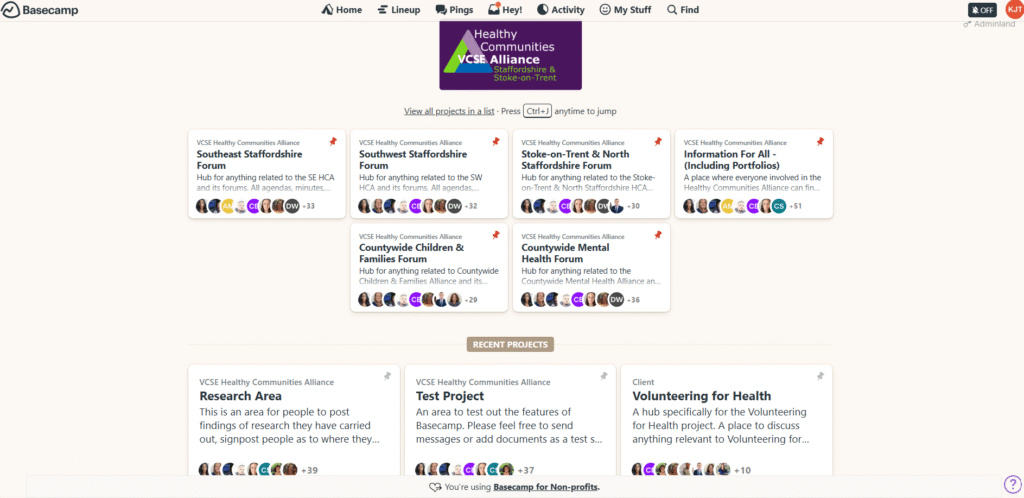
In the past year, the Alliance has taken another step forward by launching Basecamp, an online platform open to all members. Here, organisations can share live updates, resources, events, training, and opportunities for engagement—making it easier than ever to collaborate and stay connected. This spirit of openness and support has already made a big impact, not just for organisations, but for the individuals and communities they serve.
Strengthening Health Through Shared Insights and Lasting Partnerships
The quarterly forums are where the heart of the Alliance truly shines. Every few months, between 30 and 50 people from a rich mix of organisations across the county gather together—not just to listen, but to share, question, and inspire. This year alone, these gatherings have been filled with fantastic presentations from both VCSE and statutory health and care organisations. People have brought forward new initiatives, shared stories of projects that have made a real difference and sparked valuable discussions about the challenges and opportunities facing our communities. These conversations don’t just inform—they empower, helping everyone in the room to see what’s possible and to take those ideas back to their own corners of Staffordshire and Stoke-on-Trent.


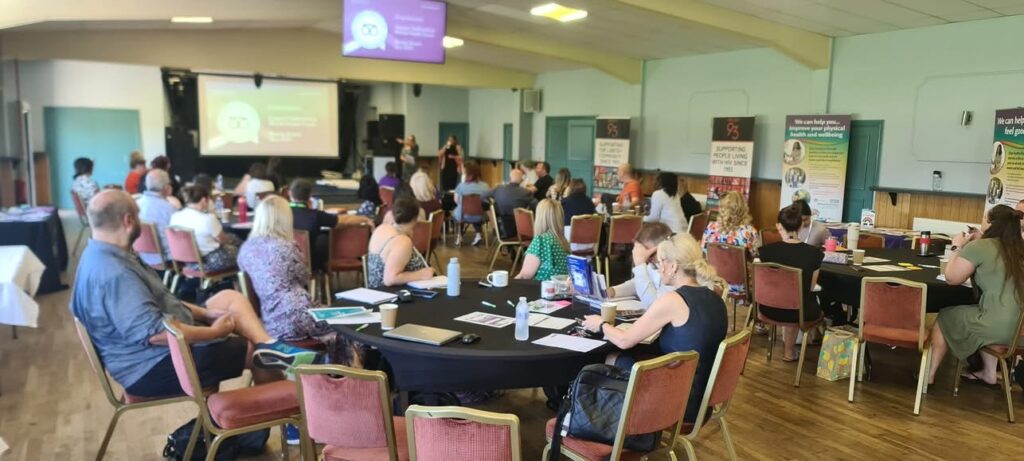
One such story comes from Spark, based in Burntwood, who shared the journey of their RISE Project, which has become a beacon of hope for the community it serves. The project’s success lies in its partnership with health systems, especially for families with children aged 0–19. (Further information can be found here: Spark: RISE Project.)The feedback from parents says it all: families feel less isolated, mental health has improved, and community ties have grown stronger. Parents now feel more confident navigating public spaces and accessing support. It tells a powerful story about what can happen when groups, who are members of the Alliance, come together, encouraging others to collaborate in the same way, as their collaboration could have a life-changing impact in their own communities.
Another inspiring example came from Burton Unity, who presented their approach to connecting with underrepresented communities and working alongside them to improve health. (Further information can be found here: Burton Unity). Their story prompted many organisations to reflect on their own practices and seek advice on reaching diverse groups across the county. After the presentation, organisations like Burton Mind, Staffordshire County Council, and colleagues from Midlands Partnership Foundation Trust reached out to Shamreen Gulzar, the presenter, to explore collaboration and support for their own projects. This is shared learning in action—opening doors for more people from all backgrounds to engage with the health system and, in turn, creating lasting improvements in population health.
The North Stoke Integrated Frailty Project is another testament to the power of partnership. Presented as a collaboration between sectors, this project aims to support people in later life and slow the rate at which their health declines. Its vision is simple but profound: to add years of good health to people’s lives and life to people’s years. (Further information can be found here: Nth Stoke Integrated Frailty Project). By preventing avoidable decline, reducing inequity, and building a sustainable model for ageing well, the project puts the VCSE sector—especially VAST and local charities—at the centre of engagement and delivery. Workshops have been offered so that anyone interested can get involved, showing once again how the Alliance opens doors for local organisations to play a part in shaping long-term community health.
National charities have also found a home at these forums. Breast Cancer Now, for example, shared the work they’re doing in the county—highlighting support groups, referral pathways, and ways to get involved. (Further information can be found here: Breast Cancer Now in Staffordshire Presentation). Their achievements are impressive: 1,300 members across the UK actively contributing their experiences to shape projects and policy; testimonials like that of Elisavet Theodoulou from the University of Sheffield, who emphasised the value of patient voices in research and project development; and resources and campaigns available in multiple languages and formats to ensure accessibility and inclusivity. Their ongoing public health initiatives and pilot programmes are expanding awareness and education, showing that with the Alliance’s support, the VCSE sector can make a huge difference in prevention, early intervention, and ultimately, saving lives.
But it’s not just the VCSE groups who take the stage. A wide range of stakeholders from the public health system also share their initiatives and strategies, inviting community groups to not only stay informed but to actively shape the future of projects aimed at improving population health. Recent highlights include presentations from the Staffordshire and Stoke Integrated Care Board on their Alcohol Strategy and the LeDer Project; regular updates from the Staffordshire County Council Public Health Team on their locality-based approach for the Supportive Communities Programme; research opportunities and initiatives from MPFT colleagues to address high infant mortality rates; and co-production initiatives from Staffordshire County Council, emphasising the vital role VCSE organisations play in making these efforts a reality. Through these collaborations, the VCSE sector is becoming ever more empowered to shape services that truly reflect the needs of the communities they serve.
The Alliance in Action: Voices from the Community
The true spirit of the Alliance shines brightest in the words of its members. Again and again, people describe how being part of this community has opened doors, sparked new ideas, and built lasting partnerships. For many, the Alliance is more than a network—it’s a catalyst for connection, learning, and collective action.
Members often speak of the Alliance as a springboard for networking and partnership working. These quotes are from feedback on evaluation collected after forums:
- “I will liaise with other agencies and will also cascade the information to my team.”
- “Made links on different projects and how to do some partnership working. Will share with my local forums also.”
- “Developing connections and working relationships with others who were in the meeting, including those on the ‘Improving Population Health’ team, and those involved in developing and delivering healthy lifestyle initiatives and promoting community engagement.”
- “Very useful—great to make connections, provide input and update others.” “I will liaise with key partners and continue to work on common projects, delivering efficient services to young people and families across Staffordshire, including regarding disseminating information, offering support, as applicable.”
- “I will share practical info on things like loneliness support and coffee connect with my local connections and colleagues. Also so many great connections and active VCSE.”
- “I will be contacting some members to discuss further some topics that have been raised to see if we can collaborate further.”
- “Presenters are always knowledgeable and the meeting is led professionally but is friendly and shows a true passion for their positions. A very valuable meeting.” “Helped with context. Made some new links, reinforced old ones.”
These reflections underscore the alliance’s role as a driving force for positive change—building bridges, fostering innovation, and empowering communities across Staffordshire and Stoke-on-Trent.
Basecamp: Powering Real-Time Collaboration and Connection Across the Alliance
Outside the buzz of the forums, it’s Basecamp that keeps the spirit of collaboration alive day in, day out. This online platform has become the heartbeat of the Alliance, making sure connections don’t just last, but grow stronger, and that new friendships are sparked all the time.
When Basecamp was first introduced, there were a few nerves. Some wondered if it would really take off, especially since other systems had come and gone. Others worried about accessibility—would everyone feel comfortable using a digital platform? But this is where the Alliance’s true strength shone through. By listening, adapting, and working together, we made sure everyone’s needs were met, and every voice could be heard.
Feedback from our forums was vital. The communications team took every suggestion on board as they shaped Basecamp, making sure it was easy to navigate and welcoming for all. The first version was rolled out gently, step by step, with plenty of opportunities for members to share what worked and what could be better. Training sessions were planned, but when some members felt overwhelmed, we responded with simple, step-by-step guides—complete with images—to make things as clear as possible. (You can see an example here.)
Once ready, every member was invited to join training sessions, with two sessions a day for a whole month to make sure no one missed out. These sessions weren’t just about learning the platform—they were about listening, answering questions, and making sure Basecamp truly worked for everyone. Even now, as our Alliance grows (with around 150 new members since last October!), monthly training is always on offer, so everyone can feel at home and get the most from this shared space.
Carrie Blount, Strengthening Communities Enabler for Places of Welcome, captures the spirit of Basecamp perfectly:
“Basecamp has become a valuable daily resource for finding out about training, initiatives and events in the Staffordshire area. We then share this information within our own Places of Welcome network as well as on Strengthening Communities social media and in newsletters. Basecamp also shares opportunities for communities to make their voices heard through surveys and focus groups. We have also shared our own Places of Welcome news and events to reach a wider audience. The rollout out of Basecamp to the voluntary sector has been excellent, we were fully supported with training and able to reach out to Kate Jackson at Support Staffordshire for any further updates and refresher training.”
Since those early days, Basecamp has blossomed. Every day, members share news, funding opportunities, resources, support requests, and more—all with the aim of reducing health inequalities and helping each other thrive. Keri Lawrence, Development and Sustainability Officer at Burton Mind, says:
“Basecamp has been a wonderful resource to have a lot of information in one place—I look forward to daily updates and it’s great that conversations happen over the platform too!”
Keri, like many others, shares what’s learned on Basecamp with their own networks, making sure support and opportunities reach as many people as possible.

The impact goes even further. The Research and Engagement Network—a partnership between NHS organisations, Keele University, Support Staffordshire, and VAST—uses Basecamp as a digital post-box for research ideas. Helen Duffy, Head of Research Partnerships at Midlands Partnership NHS Foundation Trust, shares:
“It’s been fantastic to see opportunities for the wider communities to become engaged in research—to see the reach that is achieved through Basecamp. We (as in the ICS Research & Innovation partners) have seen more and more people and communities stepping forward to give their views on, and to take part in, health and care research. This is hugely important as it makes the research more relevant to the population we serve and means our local populations that are often ‘under-served by research’ because they may not be patients in primary/secondary care can benefit from research that drives forward best health and care services. Basecamp represents a trusted platform by which we can post information, share events, and look for opportunities where we can collaborate and open up, what can sometimes be seen as a closed area, research for one and all.”
So far, eight literature reviews have been completed based on suggestions from the Basecamp post-box. Lucy Marquis, Clinical Lead Integrated Care at MPFT, adds:
“We’ve had some great responses to the women’s health survey through Basecamp.”
Siobhan Hayes, Research and Engagement Officer at Support Staffordshire also talked about how Basecamp has made a difference to their work.
“We wouldn’t have this feedback mechanism from researchers to community groups without the Alliance Basecamp and its dedicated Research section. It is an easy way to share the current research out there for a range of topics. Groups can use these findings (we hope) with service users and our aim is that it helps to identify gaps in support to help groups when applying for funding.”

Partnerships, working groups, and new initiatives have all found their start on Basecamp. Jodie Furby from the ICB has recruited Cancer Champion Trainees through the platform.
Michelle Williams, Community Development Team Leader for the Southwest at Support Staffordshire, shares:
“From Basecamp we have been able to set up a Community of Practice for the Gypsy Roma Travelling Community for Staffordshire and Stoke on Trent. Although in its early stages we have 23 members from across all sectors (VCSE, Health, Local Authority and Police). We have Dr Peter Urwin come and give us an update on work he has been doing and some clear recommendations for us moving forward.”
This is more than just networking—it’s about breaking down barriers and reaching those who need support most. For the Gypsy Roma Travelling Community, who face some of the starkest health inequalities, Basecamp is helping to build bridges and create hope for a healthier future.

Basecamp is also helping us tread more lightly on the planet. By sharing resources online instead of sending countless emails, we’re reducing our carbon footprint by up to ten times. Below are the average carbon footprints of different emails:
- An average spam email: 0.3 g CO2e (carbon dioxide equivalent)
- A standard email: 4 g CO2e
- An email with “long and tiresome attachments”: 50 g CO2e
Clare Jolly, Development Team Leader for Mental Health Learning Disabilities and Autism at Support Staffordshire, sums it up:
“I have found it a much quicker and easier way to share information. This has included encouraging organisations to share about themselves and events they may have. It has meant a timelier approach. The carbon cost of sharing forum agenda, minutes and presentations is well worth it too rather than sending lots of attachments in emails.”
As we know, carbon footprints and climate change can have a detrimental impact on health in many ways, particularly for those already facing health inequalities. By using a more sustainable approach to communication, the alliance is also playing a part in taking care of our planet—even if it is a small part, it is an important one.

Looking to the Future: Shaping Tomorrow Together
As health and social care systems continue to evolve, the role of the VCSE sector—and partnerships like the Healthy Communities Alliance—has never been more crucial. The Alliance’s commitment to collaboration, innovation, and inclusivity ensures it will remain at the forefront of driving positive change in Staffordshire and Stoke on Trent.
Moreover, by giving local people a voice in shaping health and care services, the Alliance has fostered a sense of ownership and pride, making communities stronger and more cohesive.
By building on its achievements and deepening its relationships with statutory partners and communities alike, the Alliance is well-placed to tackle future challenges and seize new opportunities for improving health and wellbeing for all.
If you are interested in joining the VCSE Healthy Communities Alliance please see further information on the alliance and how to sign up here: Healthy Communities Alliance – Support Staffordshire