
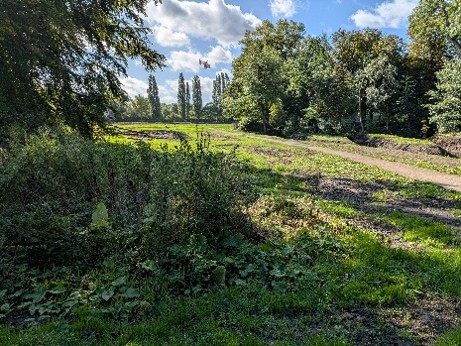
Volunteers have been involved with gathering citizen science data for the Trent Renew project since early 2025. Trent Renew is funded by the Environment Agency and led by Staffordshire Wildlife Trust with the aim of improving water quality and habitat range for wildlife within and around Banky Brook (also known as Ford Green Brook) and the river Trent. Citizen science is really any information collected by ordinary people in a reasonably measurable and repeatable way that lets scientists analyse the data. It’s a phrase that could apply to people filling in a health survey but is often used in wildlife surveys. If you have ever taken part in something like the Big Butterfly Count, Big Garden Bird Watch, congratulations! You are a citizen scientist.
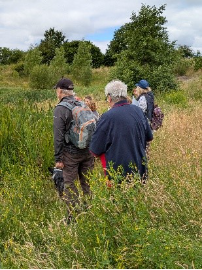
The volunteers have been going out and adding to the nature records using i-Naturalist or i-Record apps to monitor whatever plants, birds, insects, dragonflies etc we can find in five sites in Stoke on Trent ahead of the river restoration works. We will carry on going back out now the works have been completed to find out what changes have taken place. I-Naturalist is easy to use, and we don’t even need the same people to keep going out. We’ve been encouraging people to dip in and learn to use i-Naturalist so they can use the app wherever they enjoy being outdoors with nature. So far we have 97 different people take part and one student on placement, helping to analyse the data.
We have had specialist walks accompanied by experts in their field, sharing their knowledge of what, where and how to look for signs of particular creatures and plants. We have drawn on the knowledge of Staffordshire Mammal Group, The British Dragonfly Society, Staffordshire Wildlife Trust, Staffordshire Bat Group and Staffordshire Fungus Group and an expert on trees.
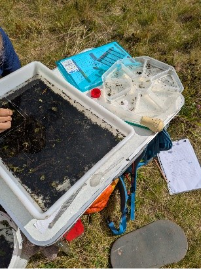
We have involved volunteers in the river fly monitoring, where a colleague from Staffordshire Wildlife Trust takes a sample of invertebrates from the water and we all count particular wriggly species as a way of assessing the quality of the water and habitat. Some freshwater invertebrates are more tolerant of pollution and some need more oxygen than others, so the range and numbers found help show the health of the river.
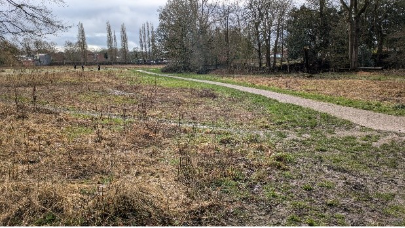
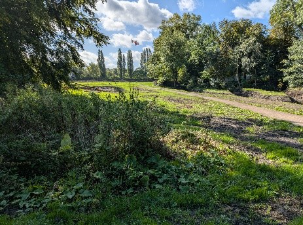
Last but not least, we have been going out and taking repeat photographs of exactly the same spot at (hopefully) exactly the same angle. This is known as fixed point photography and helps in comparing changes over the seasons and also due to works done. In the photo on the right below you can just glimpse one of the new shallow scrapes made to hold water for wildlife for longer and the new islands created at Bucknall Park.
The volunteering has been a great reason to get outdoors, connect with nature, meet people and explore the urban natural world.
If you would like to join in or find out more, you can do so here. It would be great to see you!
Tam Harrison
Community and Environment Officer